


Why Can’t I Breathe Through One Nostril?
If you’ve ever wondered, “why can’t I breathe through one nostril?”, you’re not alone—and the reassuring news is that it’s often common and temporary. Sometimes, one-sided stuffiness happens because of a normal body rhythm (the nasal cycle). Other times, it’s related to inflammation (like allergies or a cold) or a structural issue (like a deviated septum).
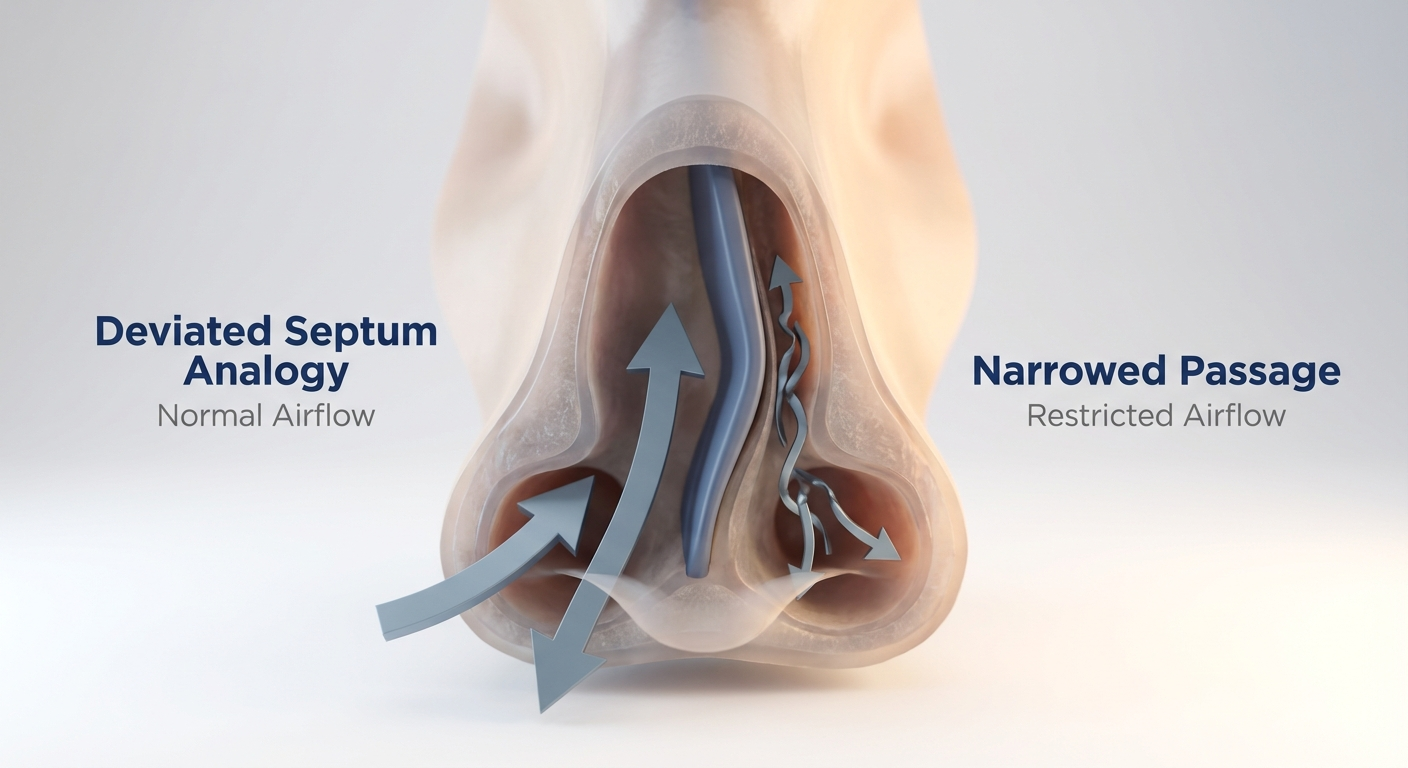
A helpful way to think about it: your nose isn’t always meant to be perfectly “50/50.” Like traffic temporarily routed to one lane during road work, airflow can shift between sides for normal reasons—then rebalance later.
The key is pattern. If it comes and goes (and especially if it switches sides), it may be normal. If it’s persistent—especially on the same side—or you have warning signs, it’s worth getting checked. (Source: Cleveland Clinic: https://health.clevelandclinic.org/why-do-i-sometimes-get-stuffy-in-one-nostril)

Is It Normal to Have One Nostril Blocked Sometimes?
Yes—in many cases, it’s normal for one nostril to feel more open than the other at different times of day.
The “nasal cycle” (a normal body rhythm)
Your nose naturally alternates airflow between the left and right sides. This happens because the lining inside each nostril gently swells and shrinks in a repeating pattern, so one side may feel more congested while the other feels clearer. Later, it often switches.
A concrete example: you might notice you breathe well through the right nostril while working at your desk, then a few hours later the left side feels more open—without any new illness. Many people don’t notice the nasal cycle until they focus on it (for example, when trying to fall asleep).
This is more likely to be normal if:
- The “blocked” side alternates
- Symptoms are mild and temporary
- There’s no significant facial pain and no bleeding
(Source: Cleveland Clinic: https://health.clevelandclinic.org/why-do-i-sometimes-get-stuffy-in-one-nostril)
-If it alternates and stays mild, it’s usually the normal nasal cycle.-
Common Reasons You Can’t Breathe Through One Nostril
If the sensation doesn’t seem to “switch sides,” or it’s happening frequently, one-sided blockage may be related to inflammation, environment, position, or anatomy.
Quick summary (for skimmers):
- Deviated septum
- Allergies
- Cold/viral infection
- Nasal polyps
- Side sleeping/position
- Irritants or dry air
- Foreign object (more common in children)
Not sure if it’s allergies or anatomy? See: deviated septum vs. allergies: how to tell the difference — https://www.clearpathnasal.com/blog/deviated-septum-vs-allergies-how-to-tell-the-difference

Deviated septum (a very common structural cause)
A deviated septum means the wall of cartilage and bone between your nostrils (the septum) is off-center. That can narrow one nasal passage and make airflow feel consistently worse on that side—especially when you exercise, when you’re trying to sleep, or when you have even mild inflammation.
Common clues include:
- Blockage is often more noticeable on the same side, day to day
- Noisy breathing, sleep disruption, or feeling more blocked during exercise
- A history of nasal injury can be a factor (but deviation can also be present without any trauma)
(Sources: Mayo Clinic: https://www.mayoclinic.org/diseases-conditions/deviated-septum/symptoms-causes/syc-20351710; Cleveland Clinic: https://my.clevelandclinic.org/health/diseases/16924-deviated-septum; Verywell Health: https://www.verywellhealth.com/my-nose-is-always-blocked-on-one-side-7693658; Shawl MD: https://www.shawlmd.com/blog/breathing-through-one-nostril-why-your-septum-might-be-to-blame)
If you’re trying to sort out patterns, this guide may help: deviated septum vs. allergies — https://www.clearpathnasal.com/blog/deviated-septum-vs-allergies-how-to-tell-the-difference
If consistent same-side blockage sounds like you, here’s a next step: deviated septum and chronic nasal congestion — https://www.clearpathnasal.com/blog/deviated-septum-and-chronic-nasal-congestion-what-to-do-next
Allergies (inflammation that can affect one side more)
Allergies can cause swelling inside the nose and extra mucus. Even though allergies often affect both sides, you can still feel it more on one side—especially if your nasal cycle is already favoring that nostril.
Clues that point toward allergies:
- Sneezing; itchy nose; itchy/watery eyes
- Clear, runny drainage
- Worse around triggers like pollen, dust, or pets
(Source: Verywell Health: https://www.verywellhealth.com/my-nose-is-always-blocked-on-one-side-7693658)
A cold or viral infection
A cold inflames the lining of your nose and ramps up mucus. That combination can temporarily make one side feel more blocked than the other. One patient-friendly way to describe it is “everything feels swollen,” but the narrower side (because of normal anatomy or the nasal cycle) is the one that feels closed.
Clues include:
- Sore throat, cough, fatigue
- Thicker mucus
- Symptoms gradually improve over days
(Source: Verywell Health: https://www.verywellhealth.com/my-nose-is-always-blocked-on-one-side-7693658)
Nasal polyps (soft growths that can obstruct airflow)
Nasal polyps are noncancerous growths linked to chronic inflammation. Depending on their size and location, they can block airflow more on one side. They can also make “normal” congestion feel stubborn—like it never fully clears.
Possible clues:
- Reduced sense of smell
- Persistent congestion and postnasal drip
- Symptoms that don’t behave like a simple cold
(Source: Verywell Health: https://www.verywellhealth.com/my-nose-is-always-blocked-on-one-side-7693658)

Side sleeping (positional congestion)
If you sleep on your side, gravity and blood flow can increase congestion in the “lower” nostril. Many people notice the blocked side changes depending on which side they’re lying on—right side down, right nostril feels worse; left side down, the left feels worse.
Clue:
- Improves after you sit up or get moving
- The blocked side often corresponds to the side you’re lying on, due to gravity and blood flow
(Source: Verywell Health: https://www.verywellhealth.com/my-nose-is-always-blocked-on-one-side-7693658)
Irritants and dry air
Smoke, strong fragrances, pollution, cleaning chemicals, and very dry air can irritate the nasal lining and increase swelling. Some people describe this as a “dry, tight” feeling rather than a drippy, mucus-heavy one.
Clues:
- Burning, dryness, or irritation
- Worse in certain rooms/environments or during winter heating season
(Source: Cleveland Clinic: https://health.clevelandclinic.org/why-do-i-sometimes-get-stuffy-in-one-nostril)
Foreign object (more common in children, but possible in adults)
A foreign object can cause sudden, one-sided blockage. In children, this is a classic cause; in adults it’s less common but still possible.
Clues:
- Sudden blockage on one side
- Foul-smelling drainage
- Sometimes bleeding
(Source: Verywell Health: https://www.verywellhealth.com/my-nose-is-always-blocked-on-one-side-7693658)
-Tracking whether symptoms switch sides, worsen with triggers, or relate to position can quickly narrow the cause.-
Quick Self-Check — Normal Nasal Cycle or Something Else?
If you’re still asking yourself why can’t I breathe through one nostril, a quick pattern check can help you decide whether to watch and wait or schedule an evaluation.
Signs it’s probably the nasal cycle
- It alternates sides
- It’s mild and improves on its own
- There’s no facial pain and no bleeding
(Source: Cleveland Clinic: https://health.clevelandclinic.org/why-do-i-sometimes-get-stuffy-in-one-nostril)
Signs it may be structural (like a deviated septum)
- The same side feels blocked most days
- It’s worse during sleep or exercise
- Long-term congestion or a history of nasal trauma
(Sources: Mayo Clinic: https://www.mayoclinic.org/diseases-conditions/deviated-septum/symptoms-causes/syc-20351710; Cleveland Clinic: https://my.clevelandclinic.org/health/diseases/16924-deviated-septum)
-When in doubt, persistence on one side points to structure; switching sides points to the nasal cycle.-
When to See a Healthcare Provider (Red Flags)
Get evaluated if you have:
- Persistent one-sided blockage that doesn’t improve
- Facial pain/pressure, especially one-sided
- Frequent nosebleeds
- Noticeable change in smell
- Thick or foul-smelling drainage or fever
- Symptoms that begin after a nasal injury
(Sources: Mayo Clinic: https://www.mayoclinic.org/diseases-conditions/deviated-septum/symptoms-causes/syc-20351710; Verywell Health: https://www.verywellhealth.com/my-nose-is-always-blocked-on-one-side-7693658)
-Seek prompt care if red flags are present.-

What You Can Do at Home (Safe, Patient-Friendly Tips)
If symptoms are mild and you don’t have red flags, these conservative steps are often reasonable to try.
Try humidity and saline first
- Saline spray or rinse can help thin mucus and wash out irritants
- Humidifier or shower steam can help if dryness is a trigger
(Source: Cleveland Clinic: https://health.clevelandclinic.org/why-do-i-sometimes-get-stuffy-in-one-nostril)
Adjust sleep position
- If one nostril blocks when you lie on that side, try switching sides
- Consider slightly elevating your head to reduce congestion overnight
Manage allergies if triggers fit
- Reduce exposure to likely triggers (dust, pollen, pets)
- If symptoms are frequent, ask a clinician about allergy strategies, which may include medications such as antihistamines or nasal steroid sprays
(Source: Cleveland Clinic: https://health.clevelandclinic.org/why-do-i-sometimes-get-stuffy-in-one-nostril)
-Start simple, be consistent, and stop or seek care if symptoms worsen or new red flags appear.-
How Doctors Diagnose One-Sided Nasal Blockage
History + physical exam
- How long it’s been happening
- Whether it switches sides
- Trigger patterns (seasonal? at home? around pets?)
- Whether sleep or exercise makes it worse
Nasal endoscopy and imaging (when needed)
- Nasal endoscopy to look for septal deviation, swelling, or polyps
- CT imaging when sinus disease is suspected or for surgical planning
(Source: Cleveland Clinic: https://my.clevelandclinic.org/health/diseases/16924-deviated-septum)
-A focused history plus an in-nose exam usually identifies the cause or next best step.-
Treatment Options (From Medication to Procedures)
If it’s inflammation (allergies/colds)
Treatment often focuses on reducing swelling and mucus. For colds, time and supportive care may be enough. For allergies, a longer-term plan may help prevent ongoing inflammation. Reassessment is important if symptoms last longer than expected.
If it’s a deviated septum (structural narrowing)
If a deviated septum is driving symptoms and it’s affecting sleep, exercise, or day-to-day comfort, a procedure may be considered—after consultation with an ENT or specialist to discuss risks, benefits, and alternatives.
(Sources: Mayo Clinic: https://www.mayoclinic.org/diseases-conditions/deviated-septum/symptoms-causes/syc-20351710; Cleveland Clinic: https://my.clevelandclinic.org/health/diseases/16924-deviated-septum)
-Treat the underlying driver: calm inflammation when it’s the issue; consider procedures when structure is the culprit.-
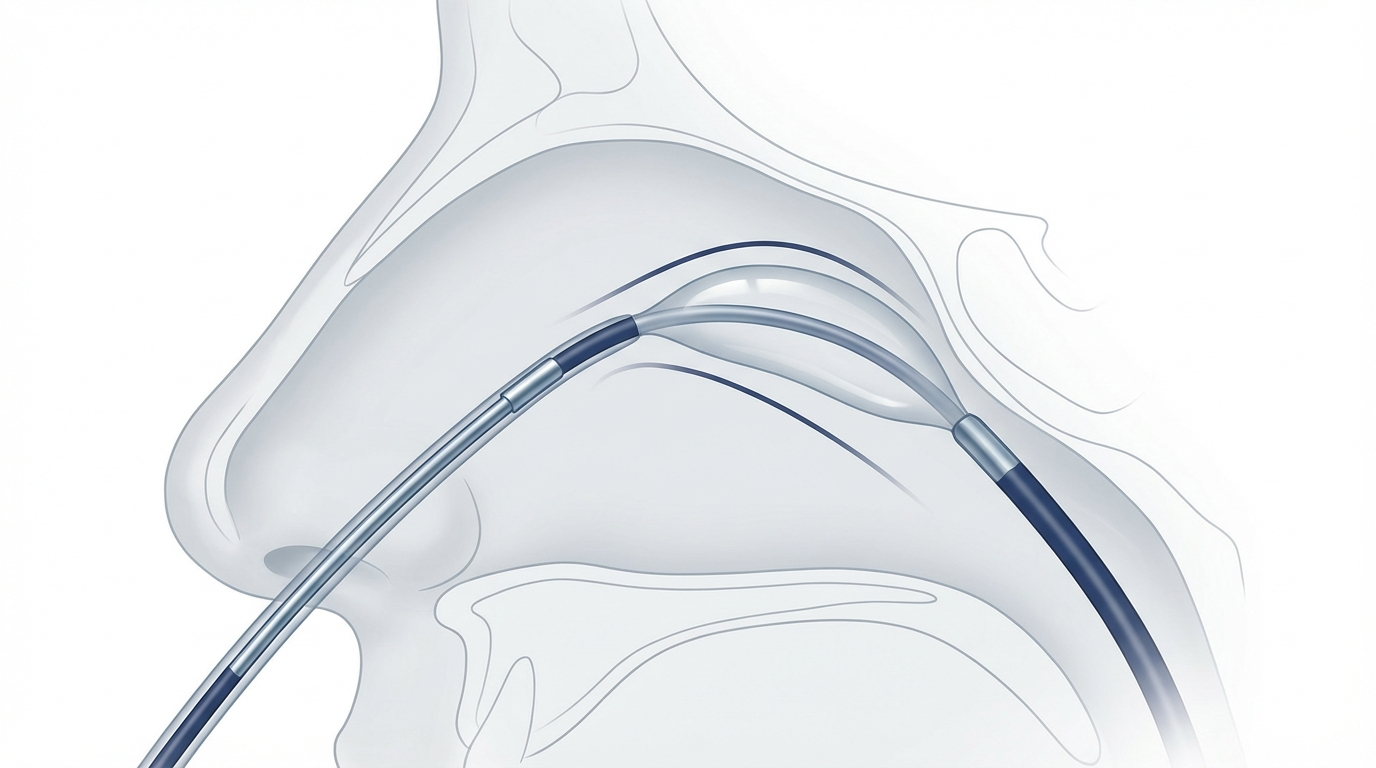
Modern Minimally Invasive Option: Balloon-Assisted Endoscopic Septoplasty (ClearPath Nasal Balloon)
For some people with persistent obstruction related to septal deviation, a newer approach is balloon-assisted endoscopic septoplasty using the ClearPath Nasal Balloon device. This newer option may be suitable for selected patients as a less invasive alternative to traditional septoplasty. For a plain-language overview, see: what is balloon septoplasty? — https://www.clearpathnasal.com/blog/what-is-balloon-septoplasty-a-minimally-invasive-option-for-deviated-septum
What balloon-assisted septoplasty is (high level)
Balloon-assisted endoscopic septoplasty is a minimally invasive technique that uses endoscopic visualization and balloon assistance to help mobilize and reposition parts of the septum—aiming to improve airflow while potentially reducing some steps used in more traditional approaches.
What early clinical outcomes show
In a retrospective analysis of 107 consecutive cases, authors reported no major intraoperative or postoperative complications, including no septal perforation, hematoma, mucosal injury, or synechia observed. Patients reported symptom improvement: SNOT-22 scores decreased by an average of 24%, including improvement in nasal congestion, headache/facial pressure, and sleep quality at 1 month. In a CT subset (23 patients), septal alignment improved by 45% at maximal deviation and 22% near the nasolacrimal duct (p = 0.005). (As reported by the authors.) (Source: Dillard JD, Koudouovoh C, Lee V, et al. Rhinology Online. 2026;9:18–23. http://doi.org/10.4193/RHINOL/25.018)
Who may be a good candidate (and who may not)
You may be a better fit to discuss options like the ClearPath Nasal Balloon device if:
- Symptoms are persistent, especially on one side
- Evaluation suggests a septal deviation contributing to blockage
- Medical therapy hasn’t provided enough relief
This is not a substitute for urgent evaluation—especially if you have red-flag symptoms like bleeding, significant one-sided facial pain, fever, or symptoms after injury.
-Only a qualified specialist can confirm whether a balloon-assisted approach is right for your anatomy and goals.-
FAQ (SEO + Featured Snippet-Friendly)
Why is only one nostril blocked at night?
At night, the nasal cycle can make one side feel more congested, and side sleeping can increase blockage on the “down” side due to gravity and blood flow shifts. Allergies can also flare overnight depending on bedroom triggers like dust. (Sources: Cleveland Clinic: https://health.clevelandclinic.org/why-do-i-sometimes-get-stuffy-in-one-nostril; Verywell Health: https://www.verywellhealth.com/my-nose-is-always-blocked-on-one-side-7693658)
How do I know if it’s a deviated septum or allergies?
A deviated septum often causes more consistent same-side blockage, while allergies tend to be more trigger-based (pollen, dust, pets) and come with sneezing, itching, or watery eyes. If you’re repeatedly thinking, why can’t I breathe through one nostril, track patterns for 1–2 weeks (side, triggers, sleep position) and bring that to your visit. For more, read: deviated septum vs. allergies — https://www.clearpathnasal.com/blog/deviated-septum-vs-allergies-how-to-tell-the-difference (Sources: Mayo Clinic; Cleveland Clinic; Verywell Health—links above)
Can a deviated septum get worse over time?
The septum itself may not “shift” dramatically without trauma, but symptoms can change over time—especially as nasal tissues respond to inflammation, aging, or recurrent congestion. If your breathing is worsening, it’s reasonable to get evaluated. Related read: can a deviated septum get worse over time? — https://www.clearpathnasal.com/blog/does-a-deviated-septum-get-worse-over-time (Sources: Mayo Clinic; Cleveland Clinic—links above)
Key Takeaways
- One-sided congestion is often normal due to the nasal cycle, which naturally alternates airflow. (Cleveland Clinic)
- Persistent same-side blockage more often suggests a structural cause like a deviated septum, though allergies, colds, polyps, irritants, position, and foreign objects can also contribute. (Mayo Clinic, Cleveland Clinic, Verywell Health)
- Seek medical care for persistent obstruction or red flags like one-sided facial pain, recurrent nosebleeds, fever, foul drainage, smell changes, or symptoms after injury.
- If a deviated septum is confirmed and symptoms persist, minimally invasive approaches such as balloon-assisted endoscopic septoplasty using the ClearPath Nasal Balloon device may be an option to discuss with an ENT specialist. (Dillard et al., 2026)
Optional On-Page SEO
Meta title: Why Can’t I Breathe Through One Nostril? Causes & Fixes
Meta description: One blocked nostril can be normal (nasal cycle) or due to allergies, a cold, polyps, or a deviated septum. Learn causes and when to see a doctor.
Next Step (Clear CTA)
If one nostril feels blocked most days—or you’re noticing sleep disruption, exercise limitation, or other red flags—schedule a visit with your local ENT for an exam. If septal deviation is part of the problem, ask whether traditional septoplasty or a balloon-assisted option like ClearPath could be appropriate for your specific anatomy and symptoms.
Medical Disclaimer
This article is for educational purposes only and is not medical advice. Please consult a qualified healthcare provider for diagnosis and treatment. It does not replace personalized medical advice. If you have severe symptoms, worsening pain, significant bleeding, fever, or symptoms after an injury, seek prompt medical care.
Contact
.webp)
Dr. David Dillard
Resent posts



Contact us
Have questions about the ClearPath Nasal Balloon System? Our team is here to help with product inquiries, demonstrations, or order support.
