
SimplifySimplifySeptalSeptalProceduresProcedures
ClearPath doesn’t just simplify nasal surgery—it reinvents it. By delivering pinpoint, controlled dilation, it eliminates unnecessary cuts and packing, trims surgical time, and lets patients breathe easier and recover faster


1K
Join thousands who find
the right tool
the right tool


The Problem
Traditional Septoplasty Has Tradeoffs...
Traditional septal surgery often relies on cutting and broad force, leading to increased trauma, longer procedures, and added risk.
With ClearPath Everyone Wins
Lorem ipsum dolor sit amet consectetur adipiscing elit sed do eiusmod tempor incididunt ut labore et dolore magna.

ClearPath offers a less invasive approach with minimal tissue disruption, little to no nasal packing, reduced post-procedure discomfort, and a faster return to normal breathing and daily activities.
.jpg)
ClearPath gives physicians greater control and precision during septal correction, enabling shorter, more efficient procedures with reduced surgical complexity and more consistent, predictable outcomes.
.jpg)
ClearPath helps hospitals and practices improve procedural efficiency, reduce OR time and resource utilization, expand care into office or outpatient settings, and support sustainable growth through strong patient satisfaction.

The Solution
Simple Septal Procedure
Precision Control
Force is applied exactly where needed—nothing more, nothing less.
Faster Procedures
Streamlined workflow means shorter procedure times. Most Procedures last 10 minutes or less.

Less Trauma
No cutting or cartilage removal helps preserve delicate anatomy.
Quicker Recovery
Minimal disruption allows patients to breathe easier, sooner.
Not Just "another" Balloon
ClearPath™ vs Traditional Nasal Balloons
Feature
The Other Nasal Balloon Systems
ClearPath™
Force Direction
Force expands outward in all directions
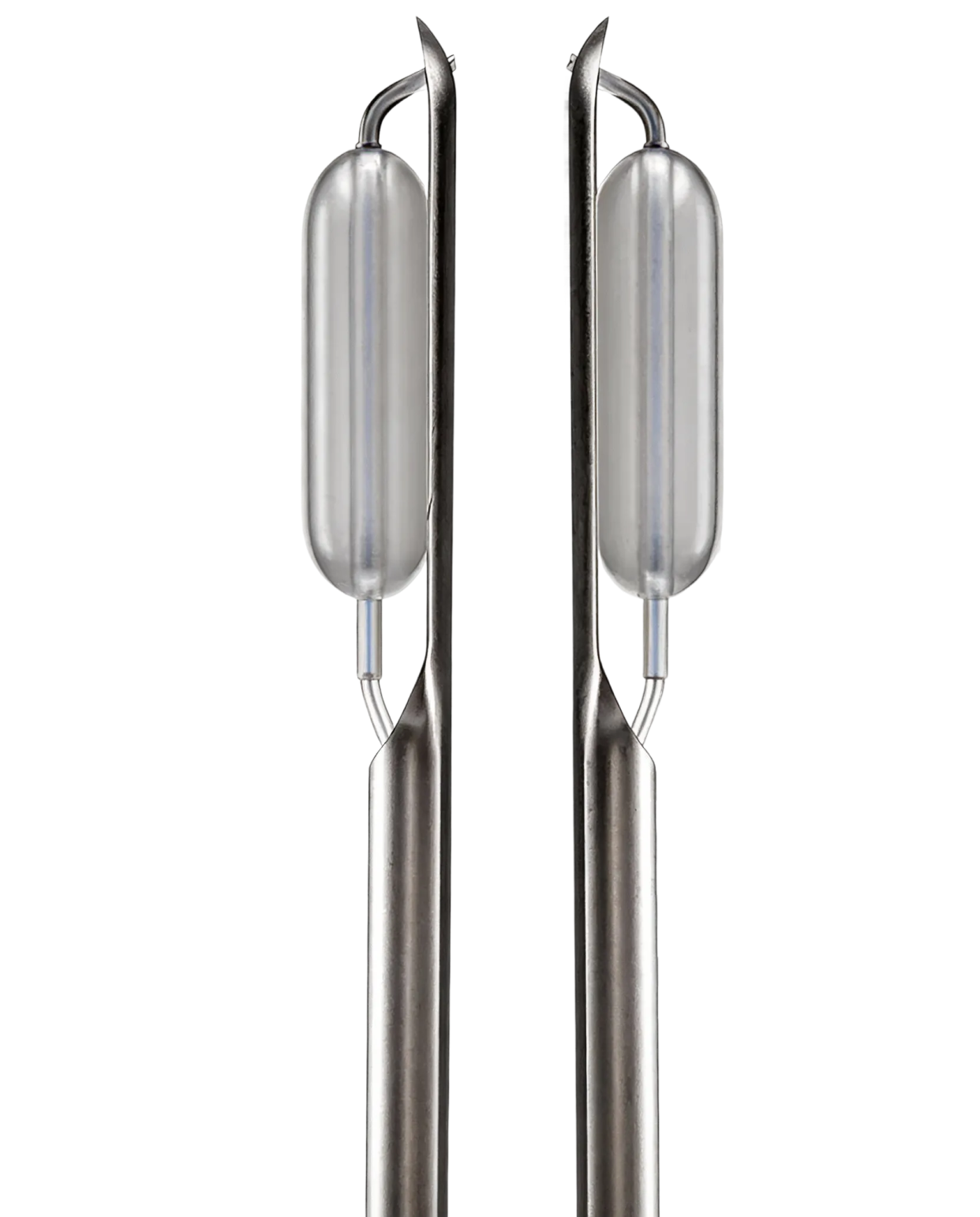
Force is directed only where the Balloon Is Facing
Control during inflation
Balloon movement is more likely during inflation
Stable, controlled positioning throughout the procedure
Protection of surrounding anatomy
Increased chance of unintended pressure on nearby anatomy
Designed to limit pressure on delicate structures
Ability to address septal deviation
Limited ability to meaningfully influence the septum
Built specifically to assist with septal correction
Re-usablity
1 time use only
System is designed to be partially re-used
Stability
More prone to shifting
Maintains position during inflation

The ClearPath Pressure Test: Proven Control Under Pressure
.webp)
Creating Dr. David Dillard Discusses the ClearPath Nasal Balloon Video Content for Social Media

ClearPath™ Nasal Balloon – Simplify your Septal Surgery
Harness Precision. Protect Patients.
By pairing an anatomically curved, reusable spatula with a secure, guidewire‑compatible high‑pressure balloon, ClearPath delivers precise, targeted dilation that protects delicate structures and streamlines nasal surgery.
.webp)
Curved Spatula
.webp)
Guidewire Compatibility
.webp)
Durable and Sterilizable
.webp)
High-Pressure Capability

More Than a Device. A Growth Partner.
ClearPath partners with hospitals and practices to support patient education, awareness, and demand—helping drive qualified patient volume while improving care delivery.
Equip Your Practice
We provide ready-to-use educational and marketing assets—website copy, visuals, and patient education materials—designed to explain nasal obstruction and ClearPath clearly and compliantly.
Launch a Custom Landing Page
We build a dedicated ClearPath landing page for your practice, tailored with your branding, location, and scheduling flow to capture patient interest.
Drive Qualified Patient Demand
ClearPath supports awareness and education efforts that guide patients to your custom page, helping connect informed patients directly to your practice.
Convert and Grow
Patients schedule with your team, procedures are delivered efficiently, and strong patient experience supports sustainable growth.
Our Recent articles
There are many variations of passages of Lorem Ipsum available, but the majority suffered alteration in some form injected humou.

.webp)
achievements
Our achieved awards
2012
Awwwards
Lorem ipsum dolor sit amet consectetur. Scelerisque cursus eget aliquet vel elit. Suspendisse odio augue ultrices sed adipiscing.

.svg)
2016
Dribbble
Lorem ipsum dolor sit amet consectetur. Scelerisque cursus eget aliquet vel elit. Suspendisse odio augue ultrices sed adipiscing.

2019
Hubspot
Lorem ipsum dolor sit amet consectetur. Scelerisque cursus eget aliquet vel elit. Suspendisse odio augue ultrices sed adipiscing.
.webp)

CleatPath FAQs
What are warehousing and storage?
What are warehousing and storage facilities?
What are the types of warehouse and storage facilities?
What are the benefits of using a storage facility?
